About Project
Fabricator Name : ANJ Industrial Fabricating Ltd.
GC : IDEAL Contracting
Construction: SACHSE Construction
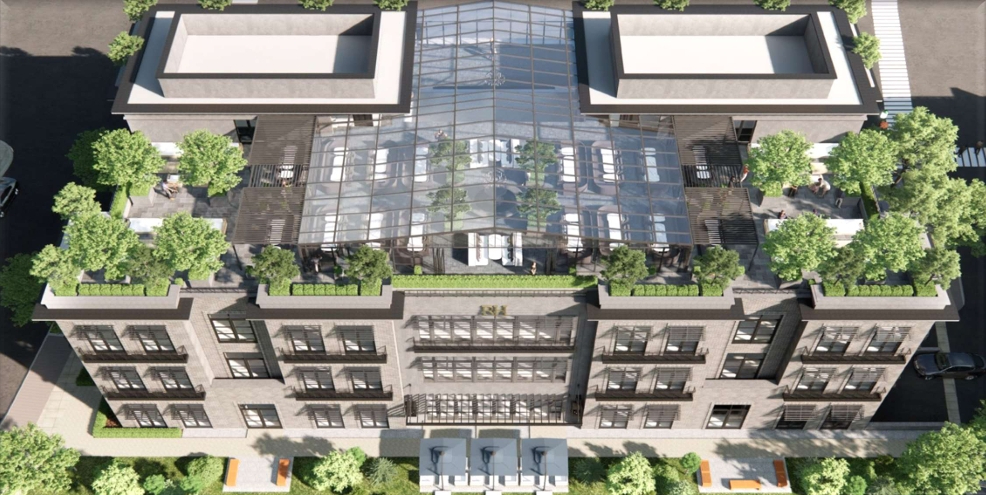
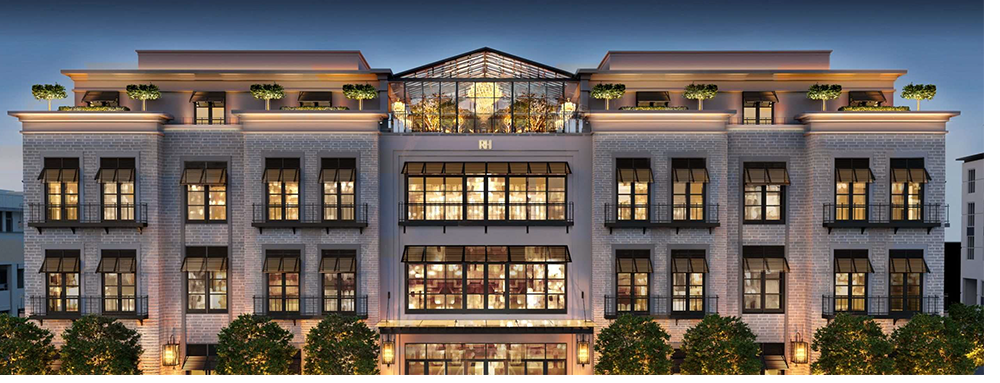
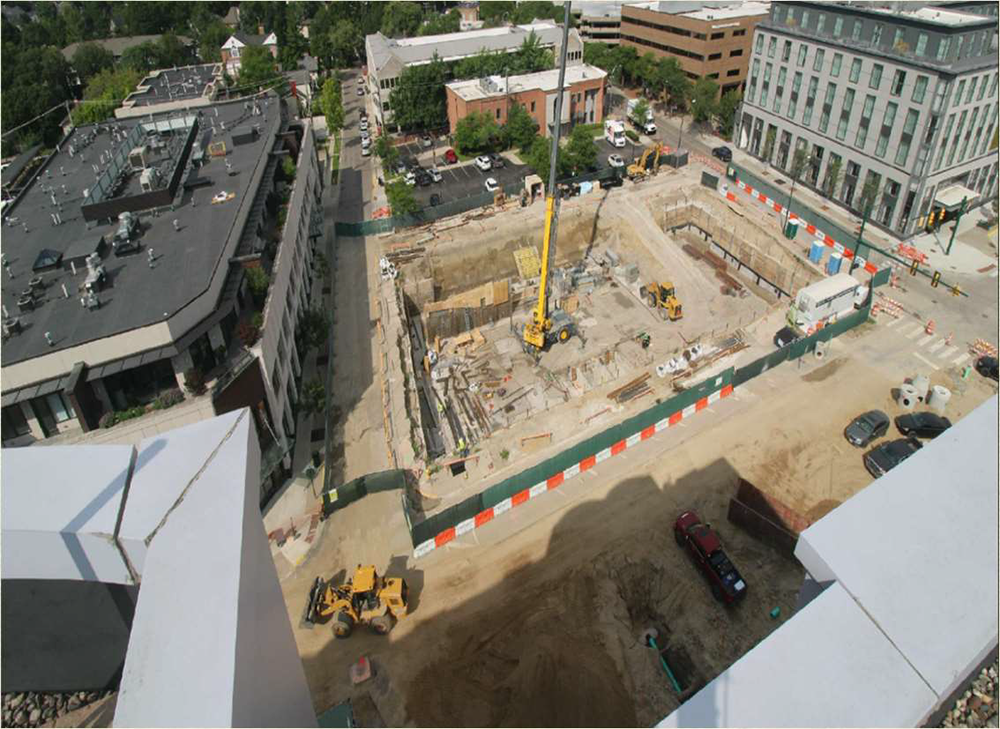
Project Name : RH DETROIT GALLERY. 300 S. Old Woodward, Birmingham, MI 48009.
Project Type : Commercial Building
Tonnage : 3500 T
Project Duration : 06Months
Team Size : 22
Project Deliverables:
- 3D Model constructed as per received design drawings.
- Individual Member Shop Drawings with bill of material.
- Separate assembly part details, such as plates, angles, channels etc.
- Field Erection Dwgs.
- EJE, KISS, Material Summary, Bolt Lists & Other material Procurement files as per client requirement.
- Various Customized reports such as CNC, DXF Plate, Fabtrol etc. as per client requirement.
Bulletin-1 & Bulletin-3 Revisions
- Structural dimensions, including member placements, were adjusted.
- Shear loads on beam end connections at various floors underwent revision.
- Section sizes of multiple members were recalculated based on loads and design criteria.
- The design load for moment connections at beam ends on respective floors was altered.
- Changes were made to member end connections on respective floors.
- Elevations of multiple members were revised to accommodate changes in framing and slab elevation/depression.
- Significant design alterations were implemented in miscellaneous steel framing along the perimeter of each floor
Bulletin-3 Revisions (In addition to Bulletin-1 changes):
- The grand stair underwent a complete redesign due to modifications in materials
- Considerable design changes were made to roof framing, particularly in the Roof Top Cafe Area.
Bulletin-4 Revisions:
- The release pertained solely to lightning and did not have any implications for structural steel.
Bulletin-5 Revisions:
- Bent plates were added to accommodate revised slab depression positions
- Additional beams and pour stops were installed at new slab openings and infill decks at existing slab openings in
two locations on the second floor.
These bulletins seem to capture a comprehensive range of structural revisions, from adjustments in member sizes and
connections to significant redesigns of specific elements like stairs and roof framing.
Challenges in projects
- The Project Consists of about 34 Sequences, with some of the
misc steel with complex framing, coordination between
sequences was a tough part.
- Coordination with other disciplines: Collaboration with architects, MEP (mechanical, electrical, plumbing) engineers, and other stakeholders to integrate structural elements seamlessly into the overall building design.
- Variety of surface preparation & finish as per structural & client requirement such as galvanized, color galvanized,fire proofing & safety paints.
- Various connections for heavy structural members with longer length span with suitable load requirements.
- Design changes: Adapting to design revisions or client feedback while maintaining structural integrity and project timelines.
- Various connections for heavy structural members with longer length span with suitable load requirements.
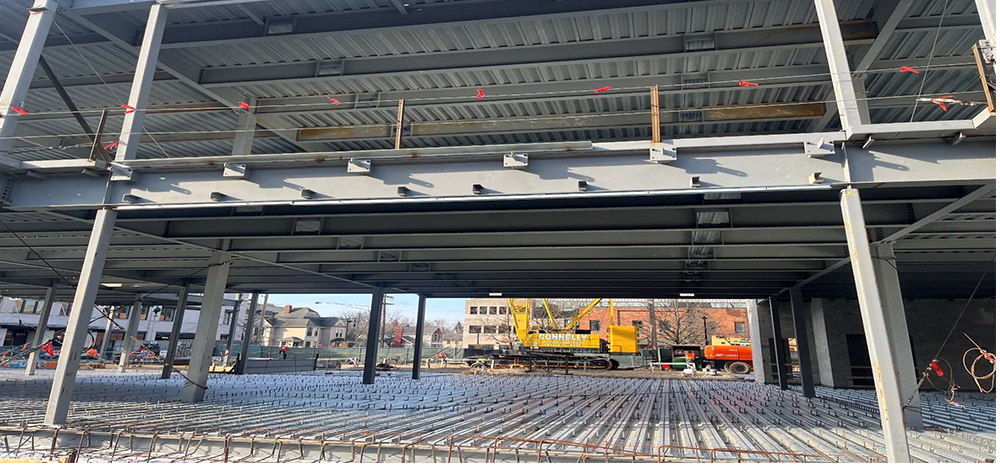
- The first-floor horizontal bracing comprises wide flange material with bolted connections at both ends of the top and bottom flanges, following precise design calculations. This framing is situated in a loading zone, serving as a structural system that channels horizontal forces to vertical bracing planes within steel structures. It’s instrumental in withstanding lateral loads, maintaining the structure’s planar integrity, and averting deformation.
- The Grand Staircase stands as a testament to its vast dimensions and commanding presence, often spanning numerous floors or levels within the gallery. It represents a fusion of architectural magnificence, functional design, and cultural significance, leaving an enduring impact on visitors. Notably, the staircase’s design incorporates HSS stringers for framing and load.
- Crafting a structural steel framing system for a rooftop café entails meticulous attention to safety, functionality, and aesthetics. Situated atop buildings, these charming and fashionable dining establishments offer sweeping views of cityscapes or landscapes. In this specific project, tilted slope beams were engineered to accommodate moment connection loads.
- Infill beams, also referred to as filler or secondary beams, are frequently
employed in steel structures to accommodate variations in slab thickness,
often arising from architectural or functional demands such as drop panels or beams. Their critical role lies in supporting slab depressions, maintaining structural stability, and facilitating design flexibility, all while optimizing cost efficiency. distribution at mid-landings, with pan treads affixed atop the stringer, a departure from conventional stair fabrication methods.
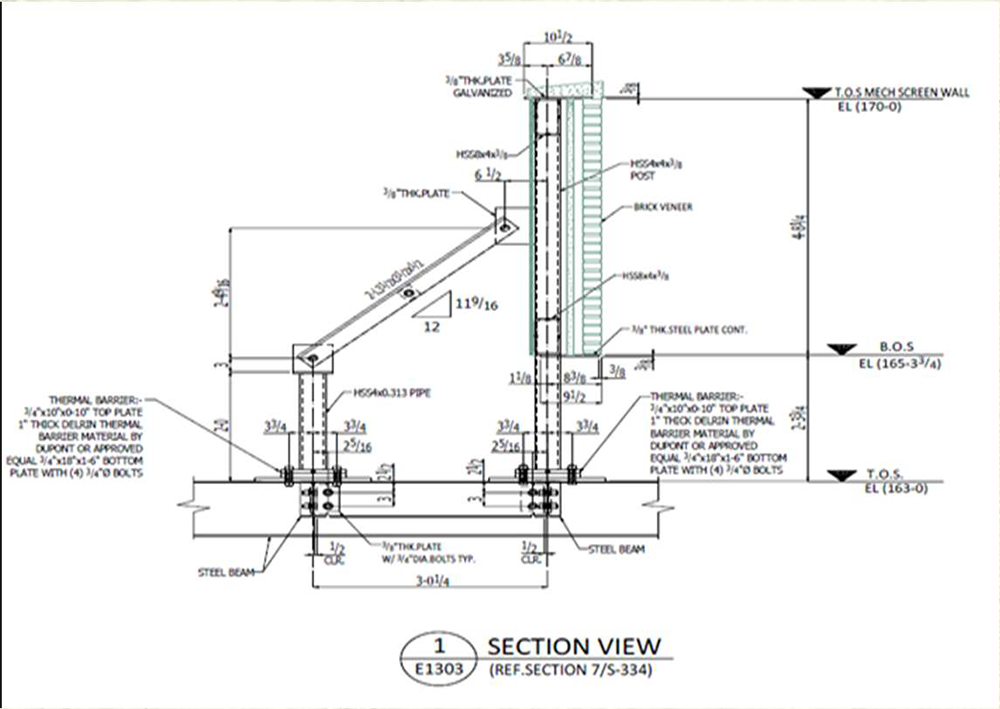
- Screen wall framing encompasses the structural framework that supports and encloses screens or panels, typically fashioned from materials like glass, metal, wood, or composites. These walls serve diverse functions, including privacy provision, space delineation, light control, and aesthetic enhancement. The screen wall framing in this instance is coated with galvanized paint, with a notable challenge being the connection of screen wall posts to avoid interference with rooftop units.
- The entry canopy extends along the front and sides of the building. These canopies consist of single-shop attached frames, coated with galvanized paint, and are affixed to the wall using rod brace connections equipped with turnbuckles and clevises, secured by anchored end plates. Serving as a narrow roof system, the steel structure canopy shields buildings from rain and falling debris while offering shade from the sun.
Achievements
- Project started & completed approval schedule 01 months before
scheduled date.
- No fuss on paint, connections or any other detailing issue.
- Happy Customer.